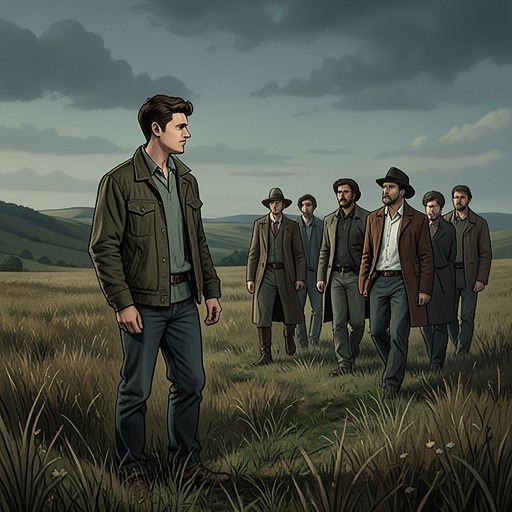
Peter’s scrapbook
The Power of the Dog (Thomas Savage Edition)Peter’s scrapbook is both a collection of found images and a private blueprint for the life Peter Gordon wishes his family had lived and might yet attain. Its scenes of luxury protect an idealized image of his parents from poverty and humiliation; later, as Rose Gordon Burbank becomes its central subject, the scrapbook helps shape Peter’s response to her marriage and gives the wedding a place in his carefully preserved private world.
Making and Contents
Peter began the scrapbook with photographs, drawings, and advertisements cut from old magazines that had accumulated unread at school. The titles included Town and Country, International Studio, Mentor, and Century. A schoolteacher allowed him to cut them up, seeing little value in the material for herself or her pupils. Peter, however, selected and pasted the images with care, making an object out of what others had left neglected.
The images repeatedly offered wealth and elegance: ocean liners setting sail, a celebrated railroad train departing, jewels, English country houses, heavy draperies, leather luggage, and fashionable bathers at Newport. The automobiles in those scenes included Locomobiles, Isotta-Fraschinis, and Minervas. The scrapbook’s appeal was not luxury alone. Peter chose images in which the human figures could stand in for his parents: his mother on a terrace overlooking a sculptured lawn, his father checking into a grand hotel. The pictured world thus gave material form to a family portrait that real circumstances had denied him.
A Blueprint for the Family He Imagines
Peter’s collection answered the family’s failure and the persistent wind with a vision of a different future. He imagined himself becoming a great surgeon, presenting a paper before learned men in France, while strangers admired his mother’s beauty and his father’s kindness. The scrapbook joined those ambitions into one scene of anticipated recognition: professional achievement would also restore the dignity and social standing he wanted for his parents.
That idealized portrait mattered at school, where Peter stood unmoved when other pupils said his father had spoken to a prostitute. His composure belonged to the same private resistance as the scrapbook: he would not let other people’s insults dictate the image of the Gordons he held dear. After Johnny Gordon’s death, Rose became the scrapbook’s sole remaining subject. For five years it served Peter as a guide and a Bible, a private measure of the future he wanted to make possible for her.
The Wedding and Its Last Page
When Rose told Peter she might marry George, Peter understood that the marriage could give her the life he had long wanted her to have. He did not feel jealousy of George, or kept any jealousy under the same impersonal control as his hatred of those who threatened his private images. To Peter, Rose’s marriage meant escape from the Red Mill, where she had to endure drunken remarks and insinuating smiles to earn a living, and the prospect of fashionable clothes, a Lincoln or Pierce automobile, ocean travel, and fresh flowers.
Peter was the only guest at the wedding, a position he considered fitting because he was the only other principal involved. He admired the roses George had arranged in brass pots on the altar and was deeply moved when Rose, in her dark blue traveling suit, seemed to him the elegant and enchanting woman of his imagined world. He recalled a line from his father’s books, from Byron’s “She Walks in Beauty.” His response linked the real ceremony to the idealized figures he had collected and cherished.
The scrapbook also gave the wedding a physical afterlife. Peter wanted one of the altar roses afterward, believing that a few pressed petals would make a fitting entry on its last page. The planned keepsake would preserve not merely a flower but the moment when the future he had pictured for Rose began to take shape. Yet the arrangement that followed the ceremony separated mother and son for the remainder of the school year: Rose found Peter room and board with Mrs Mueller in Herndon, while promising to visit on weekends and inviting him to the ranch. The scrapbook therefore holds together Peter’s imagined family life and the real changes that both fulfilled and unsettled it.